Announcement

Collapse
No announcement yet.

The Energy Thread

Collapse
X
 
  • Filter
  • Time
  • Show
Clear All
new posts

  • All-American
    replied
    Originally posted by Jeff Lebowski View Post
    Fusion is always 15 years away.
    Maybe. But a lot of people just bet a lot of money that they can make it happen.

    https://oilprice.com/Alternative-Ene...sion-Boom.html

    Maybe the reason fusion has always stayed fifteen years away is that we've never undertaken the fifteen-year journey of work, progress, and expense necessary to achieve it. Why would we, when it is still so much cheaper to turn a turbine by burning fossil fuel?

    But as that option becomes increasingly unfeasible, and the need for a carbon-neutral base generating option becomes increasingly great, maybe-- just maybe-- we will finally do what it takes to accomplish it.

    Leave a comment:


  • Jeff Lebowski
    replied
    Fusion is always 15 years away.

    Leave a comment:


  • All-American
    replied
    Not exactly a Kitty Hawk moment, but technically a step toward commercial fusion power.

    https://www.sciencealert.com/for-the...ed-by-the-fuel
    https://physics.aps.org/articles/v14/168


    In an earlier post I talked about the target we are trying to hit, where the amount of energy put into the system is exceeded by the energy created by the fusion reaction ("Q>1"). So far, we have been able to create a fusion reaction, but only at an expense of energy that vastly exceeded the output. At Q>1, we reach or at least approach "ignition," the point at which energy output from the fusion process will be able to perpetuate the fusion reaction.

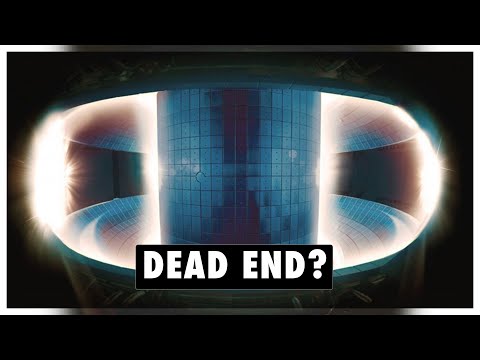
    This latest step has a very technical claim to reaching Q>1. They used a different process than most others (including Commonwealth Fusion, the entity that made the recent breakthrough in magnet technology). Instead of the tokamuk (donut) design, they fired lasers at a tiny capsule of hydrogen isotopes. This created conditions necessary to trigger a fusion reaction, which output a record 1.3 megajoules of energy. The fuel capsule generated over five times more energy than it absorbed from the lasers, technically meaning we had a result where more energy was generated by the fusion reaction than was absorbed by the fuel. As one physicist quoted in the second article put it, “the scientific demonstration of the ignition process has indeed been achieved.”

    This is a technical achievement, like I said, because the actual input from the lasers was 1.9 megajoules, exceeding the 1.3 megajoule output of the reaction. A lot of energy is lost between shooting the laser and reaching the fuel capsule. Creating the 1.9-MJ-laser input, moreover, required around 400 MJ of electricity.

    So, no ticker tape parades warranted just yet. We still have a long way to go even to get to the more meaningful sense of Q>1, where the energy outputs exceed the energy inputs-- much less the higher Q ratios where the outputs can power the reaction, and then generate excesses to put on the grid. But it's a step.
    Last edited by All-American; 12-08-2021, 09:14 AM.

    Leave a comment:


  • Moliere
    replied


    Leave a comment:


  • Copelius
    replied
    Originally posted by old_gregg View Post

    i actually dont think she's smart at all

    Leave a comment:


  • old_gregg
    replied
    Originally posted by Moliere View Post


    Warren is a smart person. There’s no way she actually believes this. The oil markets are about as efficient as a physical commodity market can get. Worldwide prices are usually pretty tight in terms of arbitrage. Sure, a couple cents per barrel can be made here or there through trading, but price gouging in the oil market would take organizing hundreds upon hundreds of producers, refiners, and retailers worldwide.

    The real cause for higher oil prices is much more complex. It includes limited access to capital (thanks to the progressive left), lower invested capital/cash flow in larger projects (due to lack of confidence in future returns and a severely backwardated oil curve), and OPEC+ still curtailing production (which has nothing to do with Exxon or chevron).

    This is what the liberals wanted. They wanted to make it tough on oil companies so EVs would be the choice of consumers. It just so happens that the world isn’t ready to abandon fossil fuels yet so we all get to deal with the high cost until oil companies invest more (they need a reason to) or EVs become more available and cheaper.
    i actually dont think she's smart at all

    Leave a comment:


  • chrisrenrut
    replied
    Originally posted by Moliere View Post


    Warren is a smart person. There’s no way she actually believes this. The oil markets are about as efficient as a physical commodity market can get. Worldwide prices are usually pretty tight in terms of arbitrage. Sure, a couple cents per barrel can be made here or there through trading, but price gouging in the oil market would take organizing hundreds upon hundreds of producers, refiners, and retailers worldwide.

    The real cause for higher oil prices is much more complex. It includes limited access to capital (thanks to the progressive left), lower invested capital/cash flow in larger projects (due to lack of confidence in future returns and a severely backwardated oil curve), and OPEC+ still curtailing production (which has nothing to do with Exxon or chevron).

    This is what the liberals wanted. They wanted to make it tough on oil companies so EVs would be the choice of consumers. It just so happens that the world isn’t ready to abandon fossil fuels yet so we all get to deal with the high cost until oil companies invest more (they need a reason to) or EVs become more available and cheaper.
    Warren’s brand is based on blaming all the evils in the world on big corporations. She wants to be seen as the champion of the little guy.

    Leave a comment:


  • Moliere
    replied


    Warren is a smart person. There’s no way she actually believes this. The oil markets are about as efficient as a physical commodity market can get. Worldwide prices are usually pretty tight in terms of arbitrage. Sure, a couple cents per barrel can be made here or there through trading, but price gouging in the oil market would take organizing hundreds upon hundreds of producers, refiners, and retailers worldwide.

    The real cause for higher oil prices is much more complex. It includes limited access to capital (thanks to the progressive left), lower invested capital/cash flow in larger projects (due to lack of confidence in future returns and a severely backwardated oil curve), and OPEC+ still curtailing production (which has nothing to do with Exxon or chevron).

    This is what the liberals wanted. They wanted to make it tough on oil companies so EVs would be the choice of consumers. It just so happens that the world isn’t ready to abandon fossil fuels yet so we all get to deal with the high cost until oil companies invest more (they need a reason to) or EVs become more available and cheaper.

    Leave a comment:


  • Lost Student
    replied
    Originally posted by All-American View Post

    Someday soon, probably within the decade, we'll get to Q>1. You'll see comparisons between that moment and when a couple of doofuses from Ohio kept a glider in the air for less than 20 seconds on a beach in North Carolina. And it will be about that useful, even though it will have been immeasurably more expensive. Whether fusion will ever be a practical power source will depend on what happens next.
    I'm surprised our Dayton apologist hasn't jumped on this yet. The whole point was that was the first powered flight!

    Leave a comment:


  • old_gregg
    replied
    Originally posted by Moliere View Post
    Oil is over $80

    Leave a comment:


  • All-American
    replied
    Originally posted by beefytee View Post
    Sorry, late to the conversation here.

    Is fusion considered nuclear free? What exactly are we fusing?

    I know that engineering problems are easier to overcome than physical or chemical problems, but just because something is possible, doesn't mean it will ever be practical?


    I think that fission holds a lot more promise to meet clean, safe energy needs over the next 50 years than fusion.
    It is certainly considered less problematic than nuclear fission, in terms of handling radioactive materials. The substances being fused in most studied fusion reactions are isotopes of hydrogen, one with a proton plus one neutron (deuterium) and the other with a proton plus two neutrons (tritium). The fused hydrogen atoms form a helium atom. Deuterium can be pulled from almost any source of water, while tritium can potentially be synthesized using lithium. So, the inputs are deuterium and lithium (both readily available) and the output is helium (a safe, inert gas).

    I have to confess that on further review the goalposts are further off than I initially thought. When the articles and publications I read talked about "Q" (as in Q>1, when more energy is output than input), they were comparing output energy with the amount of energy that actually reached the plasma-- not the total amount of energy to run the whole apparatus. So Q=1 is not "burn" status, where the fusion reactor will create enough energy to run itself. We'll need "Q" to be several times higher than 1 to capture the energy expended in running the magnets, etc., and to recover lost energy from the inefficiencies of converting heat to electricity to the point that the multi-billion-dollar reactor will generate enough power operate on its own, much less charge someone's phone.

    Someday soon, probably within the decade, we'll get to Q>1. You'll see comparisons between that moment and when a couple of doofuses from Ohio kept a glider in the air for less than 20 seconds on a beach in North Carolina. And it will be about that useful, even though it will have been immeasurably more expensive. Whether fusion will ever be a practical power source will depend on what happens next.
    Last edited by All-American; 10-11-2021, 12:04 PM.

    Leave a comment:


  • beefytee
    replied
    Sorry, late to the conversation here.

    Is fusion considered nuclear free? What exactly are we fusing?

    I know that engineering problems are easier to overcome than physical or chemical problems, but just because something is possible, doesn't mean it will ever be practical?


    I think that fission holds a lot more promise to meet clean, safe energy needs over the next 50 years than fusion.

    Leave a comment:


  • Moliere
    replied
    Oil is over $80

    Leave a comment:


  • Bo Diddley
    replied
    Originally posted by Lost Student View Post

    Nice shoutout to the U's own contribution to cold fusion.

    I wonder how far back their screwup set the technology. If those two hadn't hoaxed the rest of the world, would it have been easier to get research funding?

    What I'm trying to get at is if the U of Utah didn't exist, we'd probably have solved global warming by now.

    Leave a comment:


  • Jeff Lebowski
    replied
    Originally posted by Lost Student View Post

    Nice shoutout to the U's own contribution to cold fusion.

    I wonder how far back their screwup set the technology. If those two hadn't hoaxed the rest of the world, would it have been easier to get research funding?

    What I'm trying to get at is if the U of Utah didn't exist, we'd probably have solved global warming by now.
    Absolutely

    Leave a comment:

Working...
X