
Originally posted by frank ryan
View Post
-
Or something like this. https://s.yimg.com/ny/api/res/1.2/eZ...66152a7be9a832
-
Till the day I die, I will never understand how the religious right has just ignored the abundant evidence that Trump has so freely shared with the world, that he is degenerate.Originally posted by BigPiney View Post"...you pointy-headed autopsy nerd. Do you think it's possible for you to post without using words like "hilarious," "absurd," "canard," and "truther"? Your bare assertions do not make it so. Maybe your reasoning is too stunted and your vocabulary is too limited to go without these epithets."
"You are an intemperate, unscientific poster who makes light of very serious matters.”
- SeattleUteComment
-
That same way that the religious right chose to sit on their hands when there was a perfectly cromulant candidate on everything they wanted but the fact that he blonged to a "cult" in 2012.Originally posted by Northwestcoug View Post
I wish there was a viable third party.“Every player dreams of being a Yankee, and if they don’t it’s because they never got the chance.” Aroldis ChapmanComment
-
-
Oh! I can help you with that! Support for any politician requires some degree of compromise. This compromise is usually centered around four elements;Originally posted by Northwestcoug View Post
1- the candidates' policy positions,
2- the background, character and charisma of the candidate,
3- the candidates' ability to win, govern, and achieve their policy goals (combination of 1 and 2),
4- the alternative candidate/policy outcome.
I'll give some examples.
Ron Paul. A lot of people liked his character and policy positions, but most potential voters decided that 3 was too big of a compromise.
Bill Clinton. Voters liked his charisma, governing ability, and policy positions. They also didn't care for the Gingrich-led GOP so they determined that they could support him despite his poor character.
Joe Biden. Voters rejected Biden in 1988 and 2008 based on the first three elements. In 2020 the fourth element was so distasteful that he won their approval.
Mitt Romney. GOP Primary Voters rejected him in 2008 because he was opaque on 1, his religion added to their distrust, and McCain presented a good alternative. In 2012 GOP voters were able to sufficiently trust his policy positions and, mostly, accept his religion. He won the primary. General election voters were more comfortable with the incumbent candidate than the compromise of 1,2, and 3 required to displace Obama.
The voter balances and prioritizes these necessary compromises. In the case of the religious right, they have determined political/policy objectives are more important than character. Trump offers the best opportunity to achieve their political objectives so they provide him support, despite the compromises they have to make. The judges they support will be there long after Trump is gone. I get it.
A common mistake is to superimpose your own tolerance for compromise on to others. I think this is a dangerous path because it accentuates differences in a way that minimizes our own compromises while maximizing theirs. You may disagree with the trade-offs they've made, but once you've determined that you can never understand them then it becomes easy to dehumanize them. Every voter and voting block gets to pick their compromises. That doesn't immunize them from criticism, but you should always try understand their reasoning fairly and charitably.
Also understand that I have a degree in political science so if you disagree with me then it's clear you hate science.Comment
-
hey I'm the original 'vote for Hillary or anyone else other than Trump' guy here, so I certainly understand votes based on strategy, especially #4. But like Copelius above, my wonder at the religious right is also based on their very lukewarm support for Romney, just 4 years before they went all in for Trump. Well I think I actually understand their vote. He promised to fight their most important battles, which he has, and in turn they dropped most moral constraints that they've placed on other candidates for decades. I understand wanting to win political battles, but if they think their vote for moral issues was important enough to elect a constitutional busting president then they are dead wrong and should be shamed into oblivion. As fairly and charitable as possibleOriginally posted by YOhio View Post
Also understand that I have a degree in political science so if you disagree with me then it's clear you hate science. "...you pointy-headed autopsy nerd. Do you think it's possible for you to post without using words like "hilarious," "absurd," "canard," and "truther"? Your bare assertions do not make it so. Maybe your reasoning is too stunted and your vocabulary is too limited to go without these epithets."
"You are an intemperate, unscientific poster who makes light of very serious matters.”
- SeattleUteComment
-
This is really great. Thanks.Originally posted by YOhio View Post"There is no creature more arrogant than a self-righteous libertarian on the web, am I right? Those folks are just intolerable."
"It's no secret that the great American pastime is no longer baseball. Now it's sanctimony." -- Guy Periwinkle, The Nix.
"Juilliardk N I ibuprofen Hyu I U unhurt u" - creeksterComment
-
I think YO's assessment is true, but it needs to be paired with the turmoil that the information age has brought forth. There are no longer gatekeepers of information. Institutions that kept things in check for the most part have lost credibility (rightly and wrongly). People, in the aggregate, are not sophisticated enough to distinguish between bullshit and valuable information. They tend to trust people that look and behave like them. So then narcissistic and mentally ill people act like authorities and the unsophisticated believe them.Originally posted by Northwestcoug View PostComment
-
Great post, YO.Comment
-
-
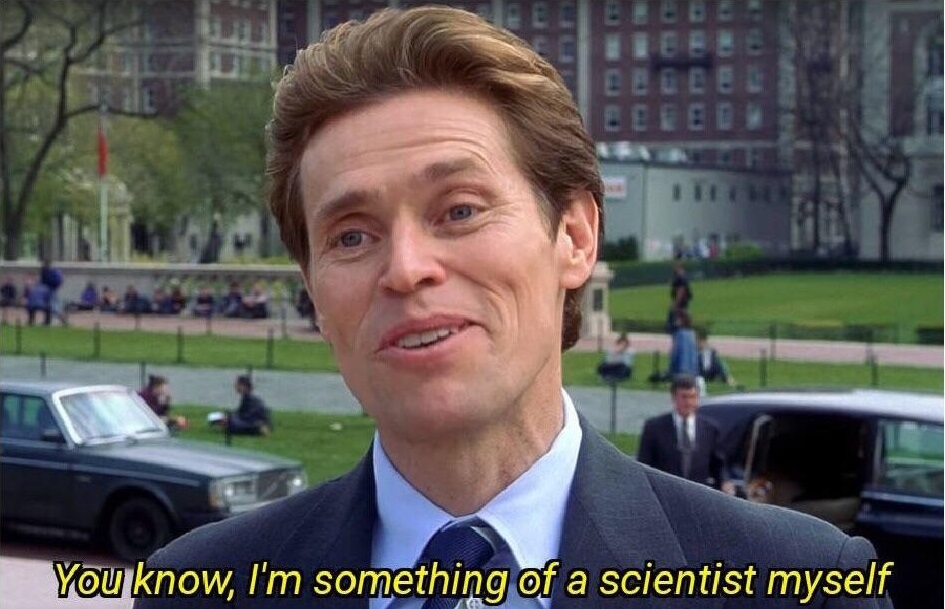
YO's AI skills are improving rapidly. Well done. At some point, btw, "how can you possibly support this guy" becomes a legitimate question to which options 1 through 4 present an insufficient response.
Source:
Prepare to put mustard on those words, for you will soon be consuming them, along with this slice of humble pie that comes direct from the oven of shame set at gas mark “egg on your face”! -- Moss
There's three rules that I live by: never get less than twelve hours sleep; never play cards with a guy who's got the same first name as a city; and never go near a lady's got a tattoo of a dagger on her body. Now you stick to that, everything else is cream cheese. --Coach FinstockComment
-
Thank you YO. Very well stated and great information.Comment
-
I've been mulling over Professor YO's exegesis on compromise and it's compelling. My problem (and NWC's I'd guess), is that in turning Trump into a net positive worthy of support, one must necessarily assign, in my view, an inappropriately small amount of negative credits to Trump for his character and ability to govern. But then, I've thought Trump was a terrible businessman and of loathsome moral character since the 1980s. His level of narcissism, historical ignorance, and amorality should disqualify anyone from the world's highest leadership position. That deeply religious people are able to make that kind of compromise is genuinely confounding to me, and to a great many other conservatives. For an explanation I guess I need a psychologist, not a political scientist.Comment
-
I absolutely agree, but under YO's rubric, that falls into category 2.Originally posted by Donuthole View Post
I also think that YO's claim that no. 3 is a combination of 1 and 2 is too simplistic. They are big influences on the success of 3, though.Ain't it like most people, I'm no different. We love to talk on things we don't know about.
Dig your own grave, and save!
"The only one of us who is so significant that Jeff owes us something simply because he decided to grace us with his presence is falafel." -- All-American
"I know that you are one of the cool and 'edgy' BYU fans" -- Wally
GIVE 'EM HELL, BRIGHAM!Comment
-
Yet, regrettably, still science.Originally posted by PaloAltoCougar View Post Ain't it like most people, I'm no different. We love to talk on things we don't know about.
Dig your own grave, and save!
"The only one of us who is so significant that Jeff owes us something simply because he decided to grace us with his presence is falafel." -- All-American
"I know that you are one of the cool and 'edgy' BYU fans" -- Wally
GIVE 'EM HELL, BRIGHAM!Comment


Comment