Temple names

Collapse
X
 
  • Time
  • Show
Clear All
new posts
  • wuapinmon
    Soul Plumber
    • Dec 2008
    • 30711

    #46
    Originally posted by Solon View Post
    The Roman-Republican poet Quintus Valerius Soranus was (supposedly) put to death for speaking the secret name of Rome. (It's "Amor" - Roma spelled backwards. Don't put me to death, pellegrino.)
    I actually wrote about Soranus for part of my dissertation. Borges mentions him in "Three Versions of Judas" as akin to the protagonist Nile Runeberg's worry that he had revealed the ineffable name of the Tetragrammaton.

    Soranus weakened the strength of Rome by revealing its protective deity’s name; this allowed Rome’s enemies to bribe away the deity by calling on his name and offering sacrifices to lure it away from Rome (Murphy 130).

    If the god’s name is secret, the theory goes that no one can call on it for favors other than those with the esoteric knowledge of the name. This story is a perfect parallel to “Tres versiones de Judas” and Runeberg’s actions, because just as Judas was seen as betraying Jesus so as to bring about both the unification of the Jewish people behind a warrior Messiah and the salvation of men, Soranus, as a non-Roman Latin sought to “[…] remove the hierarchal distinction between Rome and the Italian cities, by revealing the secret name, thereby putting them all on one level” (133). This anecdote again summarizes the struggle between the orthodox (Romans/Roman Catholics) and the unorthodox (Latins/Gnostics). The Romans have the knowledge, and when an outsider seeks to reveal their esoteric knowledge, they persecute and slay him for revealing the ineffable name of Rome. The gist of this is that just because something can be written, said, or otherwise revealed, it does not mean that it needs to be written, said, or otherwise revealed.
    Murphy, Trevor. “Valerius Soranus and the Secret Name of
    Rome,” Rituals in Ink: A Conference on Religion and Literary Production in Ancient Rome. Eds. Alessandro Barchiesi et. al. Munich: Franz Steiner Verlag, 2004.
    "Wuap's "problem" is that he is smart & principled & committed to a moral course of action. His actions are supposed to reflect his ethical code.
    The rest of us rarely bother to think about our actions." --Solon

    Comment

    • Solon
      Lost in the flood
      • Nov 2008
      • 5747

      #47
      Originally posted by Jeff Lebowski View Post
      I don't recall that post from CG, Solon. Fascinating stuff.
      Oh, I think a lot of this stuff is accessible enough without modern archaeology. It's clear enough in the ancient literary sources, although recent papyrus finds and unearthed curse-tablets make the case much more compelling. Certainly, Jewish Kaballah has examined the mystical powers of the various names of God since the Middle Ages (or earlier). The Arde'et article I linked was written in 1904. The Book of the Dead stuff, though, wasn't available until hieroglyphs were cracked in the mid 1800s (and didn't appear in English until later).

      [Aside: I should also add that there are dissenting opinions as to how widespread it was among the Greeks and Romans, but nobody doubts the power of names in ancient Egyptian, Jewish, and Vedic belief. My personal opinion holds that it was indeed an important part of Greco-roman religion, especially their mystery-cults which required initiation and swore adherents to secrecy. For instance, the Greeks were extremely reluctant to mention the name "Persephone". They preferred to call her "Kore" or "the maiden," partly because she's the queen of the underworld (and therefore apt to respond when someone calls her name), but also because I believe her name was a key word in the Eleusinian mysteries.]

      I don't think the Masons get new names. Names, though, are important in Egyptian myth (as the example of Isis and Ra above indicates), and certain masonic symbols have strong Egyptian overtones.

      It's also common to give new names in conjunction with anointing someone to priestly office or kingship. Popes take new names as do kings. This also corresponds to what goes on inside of temples.

      I'm sure someone could argue (how convincingly, though, I don't know) that the magic sub-culture of Joseph Smith's day would understand the need for secret words and magic names. It's possible that the Smith family lamens that Quinn discusses in Magic World View have overtones of the "abracadabra" magic-word-power.

      But translating this to giving/receiving new names in the temple is a stretch, in my opinion.

      [Second aside: There are other facets of the LDS temple ceremony that correspond with rituals of great antiquity - akin to the Greek "mystery-religions" I mentioned earlier. One of these is the extreme repetition. While certainly boring, it's indicative of an originally oral composition. Something too sacred to write down would have been very repetitive in order to facilitate memorization. These mnemonic place-holders are evident in extremely long works of memorized literature, such as Homer's epics.]

      As SIEQ lamented, LDS don't know the power of their own symbols. Whether through ignorance or caution or both, we have grown nervous about discussing the name of God and initiation ceremonies too much. 45 years ago, when my father was in the Mission Home, some apostle (I'm not sure which) came in for a regular "ask an apostle any question" night with the missionaries. There were lots of doctrinal questions and other topics that were normally off-limits. Somebody (so my dad told me) raised a hand and said, "What can you tell us about the new name in the temple?" The apostle just looked sternly at the young elder and then said, "Next question."]

      How much of all this was available to a Joseph Smith living in New York in the first half of the 19th century is not a question I can answer. Nor can I answer how much was available to a 19th century mason.

      Although they predate Jesus, these types of initiatory and "gnostic" rituals were never fully lost in the Christian world, as my earlier post on Cathar rituals should have indicated (if not, the fault is mine. Trust me, the Cathars were medieval gnostics).

      At the end of the day, I believe there are better avenues for either attacking or defending Joseph Smith's divine calling than digging at what he could have known. Regardless of whether one believes he was acting for God or on his own, Smith was a paradoxical mix of country-bumpkin and mystical genius. He is most likely the most important figure in American religious history. This little discursis is just a drop in the bucket of what we could be discussing concerning his legacy.
      "More crazy people to Provo go than to any other town in the state."
      -- Iron County Record. 23 August, 1912. (http://chroniclingamerica.loc.gov/lc...23/ed-1/seq-4/)

      Comment

      • Jeff Lebowski
        Corporate lackey for Jesus
        • Nov 2008
        • 69537

        #48
        Originally posted by wuapinmon View Post
        I actually wrote about Soranus for part of my dissertation.


        Man, that would be an awful last name.
        "There is no creature more arrogant than a self-righteous libertarian on the web, am I right? Those folks are just intolerable."
        "It's no secret that the great American pastime is no longer baseball. Now it's sanctimony." -- Guy Periwinkle, The Nix.
        "Juilliardk N I ibuprofen Hyu I U unhurt u" - creekster

        Comment

        • wuapinmon
          Soul Plumber
          • Dec 2008
          • 30711

          #49
          Originally posted by Jeff Lebowski View Post


          Man, that would be an awful last name.
          "Wuap's "problem" is that he is smart & principled & committed to a moral course of action. His actions are supposed to reflect his ethical code.
          The rest of us rarely bother to think about our actions." --Solon

          Comment

          • Surfah
            Where's Wallace?
            • Nov 2008
            • 33726

            #50
            Originally posted by Jeff Lebowski View Post


            Man, that would be an awful last name.


            Solon, thanks for posting that. I really enjoyed that.
            "Nobody listens to Turtle."
            -Turtle
            sigpic

            Comment

            • Jeff Lebowski
              Corporate lackey for Jesus
              • Nov 2008
              • 69537

              #51
              Originally posted by Solon View Post

              [Second aside: There are other facets of the LDS temple ceremony that correspond with rituals of great antiquity - akin to the Greek "mystery-religions" I mentioned earlier. One of these is the extreme repetition. While certainly boring, it's indicative of an originally oral composition. Something too sacred to write down would have been very repetitive in order to facilitate memorization. These mnemonic place-holders are evident in extremely long works of memorized literature, such as Homer's epics.]
              Wow. That makes a lot of sense. The LDS temple ceremony wasn't written down for several years. Long after then saints had migrated to Utah.
              "There is no creature more arrogant than a self-righteous libertarian on the web, am I right? Those folks are just intolerable."
              "It's no secret that the great American pastime is no longer baseball. Now it's sanctimony." -- Guy Periwinkle, The Nix.
              "Juilliardk N I ibuprofen Hyu I U unhurt u" - creekster

              Comment

              • TripletDaddy
                sweet triple
                • Nov 2008
                • 58186

                #52
                Since this seems to be an opportune moment to give Solon his much-deserved due, I would like to remind everyone of a somewhat-related post by Solon back on CG regarding temple symbolism. If I recall correctly, I think Solon provided pics of statues or other antiquities showing a cupped hand as a symbol of power or piety? Can't remember exactly, but I remember enjoying the read. It was very interesting.

                Anyway, thanks Solon for sharing these very interesting temple insights. I guess what I am trying to say is that Solon's employers should be paying him $350,000 a year, minimum (70% current awesomeness, 25% potential awesomeness, 5% guaranteed base)
                Fitter. Happier. More Productive.

                sigpic

                Comment

                • Pheidippides
                  Liberal Feminazi
                  • Nov 2008
                  • 14759

                  #53
                  Originally posted by TripletDaddy View Post
                  Since this seems to be an opportune moment to give Solon his much-deserved due, I would like to remind everyone of a somewhat-related post by Solon back on CG regarding temple symbolism. If I recall correctly, I think Solon provided pics of statues or other antiquities showing a cupped hand as a symbol of power or piety? Can't remember exactly, but I remember enjoying the read. It was very interesting.

                  Anyway, thanks Solon for sharing these very interesting temple insights. I guess what I am trying to say is that Solon's employers should be paying him $350,000 a year, minimum (70% current awesomeness, 25% potential awesomeness, 5% guaranteed base)
                  Do you have a link? I would love that.
                  Awesomeness now has a name. Let me introduce myself.

                  Comment

                  • TripletDaddy
                    sweet triple
                    • Nov 2008
                    • 58186

                    #54
                    Originally posted by nikuman View Post
                    Do you have a link? I would love that.
                    I don't. I tried to look for it, but I was unsuccessful.

                    It was really interesting. Does anyone else remember?
                    Fitter. Happier. More Productive.

                    sigpic

                    Comment

                    • CardiacCoug
                      вот так штука
                      • Nov 2008
                      • 11013

                      #55
                      Originally posted by TripletDaddy View Post
                      Since this seems to be an opportune moment to give Solon his much-deserved due, I would like to remind everyone of a somewhat-related post by Solon back on CG regarding temple symbolism. If I recall correctly, I think Solon provided pics of statues or other antiquities showing a cupped hand as a symbol of power or piety? Can't remember exactly, but I remember enjoying the read. It was very interesting.

                      Anyway, thanks Solon for sharing these very interesting temple insights. I guess what I am trying to say is that Solon's employers should be paying him $350,000 a year, minimum (70% current awesomeness, 25% potential awesomeness, 5% guaranteed base)
                      Count me as a huge fan of Solon as well.

                      As far as the temple symbolism, Buddhas also have hand positions that have various meanings -- these remind me of the temple a little bit, too. Meaningful names, codewords, hand symbols, etc. are all memes that have probably been used for almost as long as humans have been around.

                      Buddha Iconography, Abhaya Mudra, Dhyana Mudra, Bhumisparsa Mudra, Vitarka, Varada, Dharmachakra, Hand Gestures of the Buddha

                      Comment

                      • PaloAltoCougar
                        Semper infra dignitatem
                        • Nov 2008
                        • 16921

                        #56
                        I assisted a BYU theater professor many years ago with a book about theater during the Dark and Middle Ages (yes, it was a real page-turner). From the art of that period, I noticed that persons engaged in prayer were usually shown to be standing with both hands raised high above the head. This observation is hardly in the realm of Solon's insights, but I found it interesting.

                        Comment

                        • Solon
                          Lost in the flood
                          • Nov 2008
                          • 5747

                          #57
                          Originally posted by TripletDaddy View Post
                          I don't. I tried to look for it, but I was unsuccessful.

                          It was really interesting. Does anyone else remember?
                          Thank you for the accolades, triplet and cardiac.

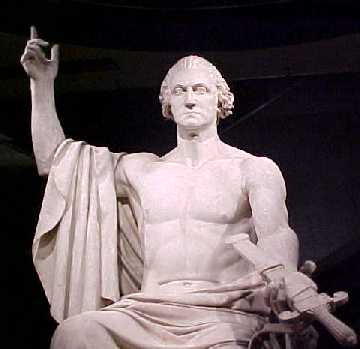
                          I couldn't find the thread either, but no matter. Generally, the upraised arm (to the square) is a symbol of power and authority. The cupped hand usually symbolizes holding grain, or otherwise bestowing material blessings. Sort of the whip and the carrot.

                          I'm sure one of the pictures was Jupiter Heliopolitanus, the Syrian God of Roman times probably descended/derived from the Semitic Ba'al (this god is also called 'Baalbek'). Jupiter at Heliopolis carried a whip in his upraised right hand, and held ears of corn in his cupped left hand. He also wears a "celestial garment" (Turcan's term in Cults of the Roman Empire, Blackwell, 1996, pg. 152) that displayed astrological and astronomical designs.

                          [ame="http://www.flickr.com/photos/30222670@N05/4425128511/"]Jupiter Heliopolitanus on Flickr - Photo Sharing!@@AMEPARAM@@http://farm5.static.flickr.com/4003/4425128511_cdcf66dfc2_m.jpg@@AMEPARAM@@4425128511@ @AMEPARAM@@cdcf66dfc2[/ame]

                          There's also the famous relief from Eleusis (the Rheitoi relief) depicting Athena, Persephone, Demeter, and Triptolemus engaging in the rites of the Eleusinian mysteries. I can't tell what the figure on the left is doing (probaly Demeter). Maybe sprinkling water or oil? The second figure from the left (going to the right) is Persephone extinguishing a torch, a symbol of death. Triptolemus and Athena are clasping hands while Athena raises her arm.

                          Triptolemus was made immortal by Demeter, although the process was interrupted before it could be completed. Nevertheless, he was charged with teaching agriculture to the Athenians (Demeter is the goddess of grain). Yet another association with ritual and fertility, blessings, the bounty of the earth, etc.

                          [ame="http://www.flickr.com/photos/30222670@N05/4425128531/"]Rheitoi relief from Eleusis on Flickr - Photo Sharing!@@AMEPARAM@@http://farm5.static.flickr.com/4027/4425128531_8afdc608ff_m.jpg@@AMEPARAM@@4425128531@ @AMEPARAM@@8afdc608ff[/ame]

                          There are plenty of other examples floating around the ancient near east and the ancient Greco-Roman world. Zeus was often shown with an arm to the square, although he was sometimes represented leaning on a spear. The other hand often held something, whether a libation-dish or a gift to mortals (the famous statue of Zeus at Olympia held Nike, or Victory in his outstretched hand, as if presenting it to those who competed in the ancient Olympic games).

                          This coin of Alexander depicts the macedonian king as Zeus. The seated god holds an eagle - the symbol of Zeus.


                          Greenough's statue of Washington in the Smithsonian hearkens back to this ancient posture, although Greenough's Washington points to the God in heaven (to avoid too much hubris, I suppose).


                          I'm outta time.
                          Last edited by Solon; 03-11-2010, 03:12 PM.
                          "More crazy people to Provo go than to any other town in the state."
                          -- Iron County Record. 23 August, 1912. (http://chroniclingamerica.loc.gov/lc...23/ed-1/seq-4/)

                          Comment

                          • TripletDaddy
                            sweet triple
                            • Nov 2008
                            • 58186

                            #58
                            solon, awesome stuff. this was basically what I was talking about. It was a very interesting post then, as it is today. (nik...no need for a link now)

                            the images are very intriguing, although I wish some of them were not blocked.

                            Triptolemus....sounds like my kind of guy.
                            Fitter. Happier. More Productive.

                            sigpic

                            Comment

                            • Solon
                              Lost in the flood
                              • Nov 2008
                              • 5747

                              #59
                              Originally posted by PaloAltoCougar View Post
                              I assisted a BYU theater professor many years ago with a book about theater during the Dark and Middle Ages (yes, it was a real page-turner). From the art of that period, I noticed that persons engaged in prayer were usually shown to be standing with both hands raised high above the head. This observation is hardly in the realm of Solon's insights, but I found it interesting.
                              This is how ancient Greeks, Romans, Christians prayed - you raised your hands to heaven (where the gods lived). You also covered your head. Folding hands and bowing heads are medieval symbols of feudal lord-vassal relationships.

                              Here's a picture of a Christian praying from a catacomb in Rome:


                              Not inappropriate in the way we think of God today (indeed, we use the word "Lord"), but still anachronistic to Jesus' time:

                              "More crazy people to Provo go than to any other town in the state."
                              -- Iron County Record. 23 August, 1912. (http://chroniclingamerica.loc.gov/lc...23/ed-1/seq-4/)

                              Comment

                              • Solon
                                Lost in the flood
                                • Nov 2008
                                • 5747

                                #60
                                Originally posted by TripletDaddy View Post
                                solon, awesome stuff. this was basically what I was talking about. It was a very interesting post then, as it is today. (nik...no need for a link now)

                                the images are very intriguing, although I wish some of them were not blocked.

                                Triptolemus....sounds like my kind of guy.
                                I don't really know how to work flickr. It's not perfect, but I tried to link to my own photos I just uploaded. Click on the title and it takes you there. I don't know why the embedding won't work.
                                "More crazy people to Provo go than to any other town in the state."
                                -- Iron County Record. 23 August, 1912. (http://chroniclingamerica.loc.gov/lc...23/ed-1/seq-4/)

                                Comment

                                Working...