If this is your first visit, be sure to
check out the FAQ by clicking the
link above. You may have to register
before you can post: click the register link above to proceed. To start viewing messages,
select the forum that you want to visit from the selection below.
At this point, just about every Californian with a pulse knows that agriculture uses 80% of the state's water, and cities 20%. This talking point is true as far as it goes, but that's not very far. You have to limit your vision to the water consumed by humans, “developed” water. This perspective blinds us to the big water picture, and it sets up an unnecessary opposition between farms and cities.
An economic solution to California's drought... Tax organic products:
How will taxing organic products help to conserve water? The answer is that organic agriculture uses more of critical inputs — labor, land, and water — than conventional agriculture. Taxation would reduce the demand for water-wasting organic products relative to non-organic alternatives, and thereby reduce some of the pressure on California’s dwindling water supplies.
Consider the inefficiency of organic agriculture. A 30-year side-by-side trial comparing yields per acre of organic versus conventional practices by the Rodale Institute (whose motto is, “organic pioneers since 1947”) contends that organic and conventional plots produce equal yields. But at the 20-year point of the Rodale study, Alex Avery, the director of research and education at the Hudson Institute’s Center for Global Food Issues, used Rodale’s own data to impeach that claim. His analysis concluded that conventional agriculture beat organic handily in “total system yields” (by 30 percent), nitrogen efficiency (by 60 percent), and labor (by 35 percent).
The U.S. Department of Agriculture’s (USDA) 2008 Organic Production Survey of all 14,450 organic farms in the United States, covering a combined 4.1 million acres, found that organic corn yields are 30 percent lower than conventional corn yields; organic rice yields, 41 percent lower than conventional rice yields; organic spring wheat, 53 percent lower; organic tangerines, 48 percent lower; and organic lettuce, 70 percent lower.
Organic agriculture is particularly insidious because it bans the cultivation of crop varieties crafted with molecular genetic-modification techniques, which are particularly relevant during droughts. Not only do genetically engineered crops offer higher yields with less use of insecticides, but they can be crafted to withstand droughts, and to be irrigable with lower-quality (such as brackish) water. For example, a decade ago Egyptian researchers showed that transferring a single gene from barley to wheat allows the wheat to get by with only one-eighth as much irrigation as conventional wheat, surviving on meager rainfall alone. Similar genetic modification has created drought-tolerant corn varieties, and more crops are in the pipeline.
Artificial grass sucks ass. I can maybe see putting in small patch in your front yard where it won't be inundated (as much) by dogs, kids and dirt, but it's a huge loser in the backyard. And it's even worse if you have a dog. [1] When a dog takes a piss on that artificial grass, where does it go? [2] How do you rid of the dirt that gets tracked in by the adjacent landscaping? [3] Do you plan on vacuuming your back lawn? [4] On top of that, the artificial grass absorbs heat and it's intolerable during the summer. Add to that the dog piss smell getting augmented by the heat.
[1] Dog piss is a liquid. It will trickle down into the substrate, e.g. a gravel layer. Rain water or irrigation water will then both dilute the urine and flush it into french drains where it is collected and transported off-site... that is, if gravity works where you live.
[2] Perhaps "dirt" an acceptable ground cover at your home, but not in the nicer suburbs.
[3]
[4] This isn't a concern in temperate regions, such as in coastal areas.
I put in a thousand square feet of the real stuff over the weekend.
Nice addition. Now you need to plant a row of trees along the back fence like the one in the far corner. Your neighbor has too good of a view into your backyard.
There's a steep hill in downtown Los Angeles - next to the Angels Flight rail and stairs for those who are familiar with the area - that overgrows with tall grasses and weeds every summer. It's much too steep to mow, so the city brings in a goats-for-hire guy who releases his goats on the hillside for a couple of days. The goats make pretty quick work of the grass and weeds.
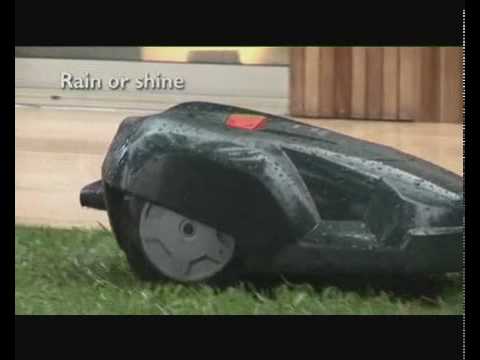
I wonder if the goats will have much to eat this summer... apparently the lawn mower at the LA Temple has been laid off:
Or cows. I have 400 acres of lawn that my cows mow until July when they go to the mountain. Sheep will do for a smaller lawn. Stay away from goats - those damn things make a mess.
There's a steep hill in downtown Los Angeles - next to the Angels Flight rail and stairs for those who are familiar with the area - that overgrows with tall grasses and weeds every summer. It's much too steep to mow, so the city brings in a goats-for-hire guy who releases his goats on the hillside for a couple of days. The goats make pretty quick work of the grass and weeds.
Or cows. I have 400 acres of lawn that my cows mow until July when they go to the mountain. Sheep will do for a smaller lawn. Stay away from goats - those damn things make a mess.
Good idea. A steer would auto-fertilize things for DH as well.
Or cows. I have 400 acres of lawn that my cows mow until July when they go to the mountain. Sheep will do for a smaller lawn. Stay away from goats - those damn things make a mess.


Leave a comment: