The Master

Collapse
X
 
  • Time
  • Show
Clear All
new posts
  • MarkGrace
    Grooveshark dick tease
    • Dec 2008
    • 31546

    #46
    Originally posted by jay santos View Post
    Another thing that kind of pissed me off about this film was that the trailer that first was posted here in this thread that looked so cool and intense was not even in the film. wtf? There were also some other clips from a trailer where he was being chased that didn't make the film.
    Yeah the trailers were done before the final cut and some of it didn't make the movie. That "was there a fight" bit in the beginning and also "just tell me something that's true" from the jail scene.

    Been following your discussion and want to chime in, but haven't been near a computer. For now ill say that as I tried to piece this together my thoughts revolved around the possibility of freddie being in some type of controlled hypnosis from "now close your eyes" basically through the point where the phone rings in the theater.
    So Russell...what do you love about music? To begin with, everything.

    Comment

    • jay santos
      Senior Member
      • Nov 2008
      • 13652

      #47
      Originally posted by MarkGrace View Post
      Yeah the trailers were done before the final cut and some of it didn't make the movie. That "was there a fight" bit in the beginning and also "just tell me something that's true" from the jail scene.

      Been following your discussion and want to chime in, but haven't been near a computer. For now ill say that as I tried to piece this together my thoughts revolved around the possibility of freddie being in some type of controlled hypnosis from "now close your eyes" basically through the point where the phone rings in the theater.
      The sad thing is that it hardly matters. With other great (or really good) confusing/non-linear films like Mulholland Drive, Primer, Synechdoche New York, Memento, Donnie Darko, Shutter Island I immediately wanted to watch the movie over again to understand it better. With this, I'm skeptical that any new understanding of how the story was intended will bring more appreciation to this film.

      Comment

      • Non Sequitur
        Where did I put my bodkin
        • Nov 2008
        • 5773

        #48
        Originally posted by CardiacCoug View Post
        EDIT: Also I wanted to add that the Scientologists should in no way be offended by this. This movie was obviously tangentially inspired by some modern religions/cults, but sure doesn't seem to me like the movie aims in any way to attack Scientology or other religions.
        I haven't seen the movie, but watching the trailers I felt like the movie had more of an Elmer Gantry feel to it than anything else...I also wondered if it was a coincidence that the main character was named Lancaster.
        "The mind is not a boomerang. If you throw it too far it will not come back." ~ Tom McGuane

        Comment

        • MarkGrace
          Grooveshark dick tease
          • Dec 2008
          • 31546

          #49
          Originally posted by jay santos View Post
          The sad thing is that it hardly matters. With other great (or really good) confusing/non-linear films like Mulholland Drive, Primer, Synechdoche New York, Memento, Donnie Darko, Shutter Island I immediately wanted to watch the movie over again to understand it better. With this, I'm skeptical that any new understanding of how the story was intended will bring more appreciation to this film.
          Why did subsequent viewings (and why would you even want to see Shutter Island a second time for understanding? Don't get me wrong, I liked it a lot; but the ending is so well explained that it left me little desire to go back and piece it together because you already knew exactly what happened) of those films give you a greater understanding/appreciation where you don't think this will? I've see all of those movies, most of them multiple times, and I'm not sure subsequent viewings necessarily gave me a greater appreciation for the themes as much as I just wanted to pull together an understanding/interpretation of what was going on.

          What's interesting about this movie is something Michael Phillips said in his review:

          Much has been written about "The Master" and its oddness, and one of the oddest of its personality traits is how straightforward it is on one level, and how challenging on others.


          I think that's what separates it from the movies you listed, and I didn't necessarily find it confusing (and it's definitely not non-linear). Like Phillips says there, I think there's a way to read it that's pretty straightforward (unlike, say, Mulholland Drive); what's difficult about it is the fact that you're always left with the impression that something else is going on that's a little bit more difficult to discern...but what? That and the fact that there are some disparate scenes that seem to convey meaning but are seemingly left unexplained and difficult to find context for.

          In that respect The Master reminded me much more of No Country For Old Men than it did any of the movies you mentioned. In addition to the above, in NFCOM you get almost the exact same thing as you did here: something of a build through the first two-thirds of the movie, scenes that seem to lack purpose (like Sheriff Bell pulling over the guy with the bodies in the bed of his truck) the anticipation of a climax that never comes (sort of an anti-climax), a narrative shift in the last act that signals something has changed but you're not sure what, and an ambiguous ending that either leaves you frustrated because of its lack of catharsis or anxious to see it again to see if you can figure out that something else that was going on.

          People are going to be frustrated with this movie for a number of reasons. Some have already been hit on. For example, the movie ask a lot of questions but is not interested in giving answers. What makes someone follow a "master"? What makes someone feel the need to have subjects? Why does someone try to force themselves into a dogma that's either not a natural fit or they know to be suspect? What was Freddy's motivation in following Dodd? What was Dodd's in creating "the Cause"? Did they love each other? And that's just a handful among the many.

          The other thing is that the movie lacks a real plot and is simply a character sketch. But even as a character sketch, it doesn't attempt or even seem interested in following people's notion of character development or character arch. We aren't given much of a backstory to either character (we know only of Freddy's first love, but that's about it), and there is no change in the characters as you would expect in a typical arch -- there is no lesson learned for each individual, and there is no evolution for either individual. Freddy and Lancaster at the end of the movie are simply the same people we meet in the beginning of the movie. I think the only thing this movie is interested in being is a look at a specific portion of a character's life and his somewhat bizarre experiences. And you'll either enjoy watching that, or yearn for something more and probably get a bit frustrated.

          Back tracking to the something else that was going on, I'm not sure what to make of it. In thinking through it yesterday, these were the things I was trying to piece together:

          1. The scene in NY where Lancaster engages in a confrontation with the dissenter
          2. Freddy's sexuality -- and specifically why he engaged in sexual release at the beginning (masturbation) and ending of the movie (intercourse), but nowhere in the middle (he doesn't pursue the advance of the daughter and his hallucination of all the naked women in the room doesn't lead to any type of gratification).
          3. The most uncomfortable hand job in cinema history where Dodd's wife tells him he can do anything he wants but she doesn't want to know about it and doesn't want the people they know to know about it
          4. The motorcycle scene and its meaning

          And that's where I wonder about the hypnosis thing. The scene with the dissenter where he calls out The Cause for just being a form of hypnosis seems too deliberately placed to not have some impact on what's going on in the story (much like the bodies in the truck bed scene from NCFOM always seemed to hold some meaning though what it was wasn't obvious). Which is why I think there was some amount of controlled hypnosis to be read into it. Dodd mentions several times that "man is not animal," and the purpose of The Cause is to create a more evolved, more enlightened man (like most religions purport to do). As The Cause started to falter (and we know it had based on what he learn later -- his son didn't believe in it, his biggest supporter -- the Laura Dern character -- seem to start to question), Dodd needed a test subject to conduct experiments on as he continued to create his cult/religion, and Freddy became that guy.

          Freddy represents man at his most primal. The guy is basically a feral animal, and that is represented early on through man's most primal instinct -- sex. I think Dodd simply saw him as a lab rat he could use to experiment with to show everyone that is his processing worked. Dodd's wife says Freddy "inspires something in him/Dodd." What in the world could possibly be inspiring about Freddy? The man is an imbecile, capable of no intellectual though-process and stuck in a state of adolescence or man in his most rudimentary form. The challenge, then, was to take this wild man and evolve him and I think what Dodd found inspiring about him was an opportunity to save his stuttering movement.

          And I think the hypnosis angle had something to do with it. Not pursuing sexual gratification during that period indicates that something else was controlling him to a certain extent (again some likely religious commentary). I initially thought the comment from Dodd's wife was about either him philandering with other women while she was pregnant, or engaging in some type of sexual behavior with Freddy. But the movie did nothing with the sexually ambiguous hints it made between the Dodd-Freddy relationship and there was never any indication that Dodd had inclinations toward any other woman. Now I think it was simply that she had seen behind the charade of his Cause and didn't want to know any more about some of the shenanigans he was conducting to hold it together. What to do with the motorcycle scene and it's pronounced "he's going to fast" I still don't know.

          Anyway, is it a great movie? I'm not sure, but I'm open to the idea that it is. Howard Hawks used to say a good film was "three great scenes, no bad ones." (Thanks, filmspotting!). Taken simply for its scenes, The Master has as many great scenes as any film I can recall in recent memory. "Don't blink" was simply as good as anything I've ever seen anywhere, and the moment where he said "now shut your eyes" just sent chills down my spine. What it doesn't have is an obvious answer as to how all those scenes work together, but I think repeat viewings will help reveal that and I'm anxious to see it again. Right now I feel like the scene in the theater with the ringing phone was possibly him being called out of some state of hypnosis, with the last scene being some type of realization on Freddy's behalf that The Cause couldn't change him and Dodd's realization that his experiment hadn't worked and he was losing his subject. There are a lot of things I'll be thinking about when I see it again.
          So Russell...what do you love about music? To begin with, everything.

          Comment

          • MarkGrace
            Grooveshark dick tease
            • Dec 2008
            • 31546

            #50
            Sorry, got a bit carried away with that as I tend to do.
            So Russell...what do you love about music? To begin with, everything.

            Comment

            • Green Lantern
              Has overcome great fear
              • Aug 2009
              • 2289

              #51
              Originally posted by MarkGrace View Post
              Sorry, got a bit carried away with that as I tend to do.
              I certainly don't think there's any apology necessary when you're forced to spend some time and effort trying to puzzle out a movie as simultaneously frustrating and rewarding as this one.

              I think you make some spot-on points about Quell's and Dodd's relationship, specifically the master/protege aspects. One of the main things I've been chewing on since seeing the film on Saturday is the significance of the scene in New York when the skeptic John More starts grilling Dodd about the truthfulness of some of his claims. In the end I think that character serves as a kind of counterpoint to Quell. Dodd has a big enough ego and is surrounded by enough sycophancy to allow him to at least mostly buy in to what he's peddling. When an openly hostile person like More comes around, it's easy for Dodd to write him off as an enemy who is not truly interested in honest debate and inquiry.

              Quell, on the other hand, represents a true challenge. Here is a guy who, at least at certain points, is openly willing to accept Dodd's teachings and follow his Cause. Yet, he is still unable to overcome the demons that are haunting him. He's basically living proof that Dodd's methods are pure malarkey, which I think drives Dodd's love/hate relationship with him. When Quell persists in resorting to violence and other animalistic behavior (even doing it on behalf of the Master himself!), it cracks the polished surface that Dodd has been struggling to create and possibly exposes him for the charlatan he is. That irks him, but he's arrogant enough to keep trying to turn Quell into what he wants him to be.

              I don't think the film works as a whole; it is full of beautiful pieces that fail to add up to something greater, but every scene between Phoenix and Hoffman was pure electricity. I wish the overall effect of the movie was as thrilling as those scenes, but I still found The Master to be a rewarding experience.

              PT Anderson is obviously one of the most ambitious filmmakers working today and, as often happens with ambitious artists, sometimes his reach exceeds his grasp. I'm not exactly sure what he was going for here. The film paints a pretty fascinating portrait of postwar America (a cinematically beautiful one too) but then fails to stick the landing. I don't think a film has to have a conventionally "complete" narrative in order to get its themes across (e.g. No Country for Old Men is tremendously rich and satisfying even with its abrupt conclusion) but The Master winds up frustratingly opaque and not as emotionally resonant as some of the fiery early scenes had me hoping it would be. For me it may fall into the category of films I admire more than I love. I still think I'm going to see it again though.
              Kids in general these days seem more socially retarded...

              None of them date. They hang out. They text. They sit in the same car or room and don't say a word...they text. Then, they go home and whack off to internet porn.

              I think that's the sad truth about why these kids are retards.

              --Portland Ute

              Comment

              • MarkGrace
                Grooveshark dick tease
                • Dec 2008
                • 31546

                #52
                I should have known this would be the film to resurrect the Green Lantern! That alone is a significant achievement.
                So Russell...what do you love about music? To begin with, everything.

                Comment

                • MarkGrace
                  Grooveshark dick tease
                  • Dec 2008
                  • 31546

                  #53
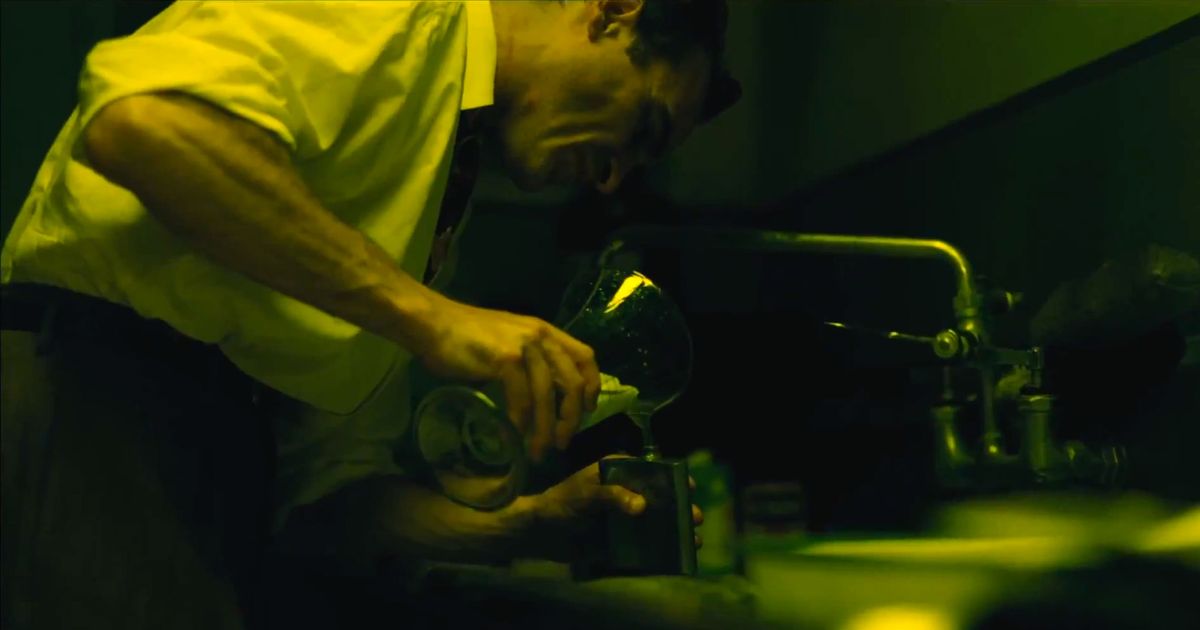
                  btw, any thoughts on the alcohol/potion/elixir? It seemed like such a major thing that there had to be something going on there.
                  So Russell...what do you love about music? To begin with, everything.

                  Comment

                  • Green Lantern
                    Has overcome great fear
                    • Aug 2009
                    • 2289

                    #54
                    Originally posted by Non Sequitur View Post
                    I haven't seen the movie, but watching the trailers I felt like the movie had more of an Elmer Gantry feel to it than anything else...I also wondered if it was a coincidence that the main character was named Lancaster.
                    Great catch! I bet that's no coincidence.

                    Originally posted by MarkGrace View Post
                    I should have known this would be the film to resurrect the Green Lantern! That alone is a significant achievement.
                    Well, it was this or Dredd 3D.


                    Originally posted by MarkGrace View Post
                    btw, any thoughts on the alcohol/potion/elixir? It seemed like such a major thing that there had to be something going on there.
                    Yeah, I tend to agree but I'm at a loss as to what it is. That scene where Amy Adams "assists" Dodd (you know the one I mean) was interesting in that it seemed to focus on marital infidelity and then "climaxed" with a vow to stay off the hooch.
                    Kids in general these days seem more socially retarded...

                    None of them date. They hang out. They text. They sit in the same car or room and don't say a word...they text. Then, they go home and whack off to internet porn.

                    I think that's the sad truth about why these kids are retards.

                    --Portland Ute

                    Comment

                    • MarkGrace
                      Grooveshark dick tease
                      • Dec 2008
                      • 31546

                      #55
                      Enjoyed the Grantland write up on PTA/The Master.

                      "I don't know if there's anything wrong with me because I don't know how other people are."

                      —Barry Egan, Punch-Drunk Love

                      Some movies you walk out of knowing everything there is to know before the credits finish rolling; some movies you wake up in a cold sweat 14 days later and can't remember how you got home, let alone exactly what you thought of what you saw. Paul Thomas Anderson's The Master is the second kind of movie. It probably says something that I've been dejectedly convinced for the past two hours that Jeffrey Wells's review of the film is definitive and cannot be topped, because Jeffrey Wells's review of the film was a 137-character Twitter post that read, in full: "The Master" rips its shirt open and shouts at the audience, "I am a bear! We are ALL bears! And you will not tame me! Accept me or go." So yeah. Just being honest.

                      Paul Thomas Anderson is arguably the greatest American filmmaker under 50 presently working,1 so it's not like we couldn't guess something heavy was coming. In retrospect, the secrecy that has surrounded The Master since its inception (April New York Times headline: "Filmmaker's Newest Work Is About ... Something") seems laughable: We knew what it would be about. Like Anderson's first five films, it would be about fathers and sons and the dissolution of the nuclear family under the onslaught of capitalism. It would be about the need to believe and inevitable abuse by others of that need. It would be about the radical loneliness in all of us. About how relief for that loneliness is there, but only sometimes and not always when you need it most. About how, as the book says, we may be through with the past, but the past ain't through with us.

                      More specifically, we knew that The Master would be "about" Scientology, in the same way that There Will Be Blood was "about" oil — which is to say, mostly as a setting and somewhat as a metaphor. In the film, Philip Seymour Hoffman plays an L. Ron Hubbard surrogate by the name of Lancaster Dodd, founder of The Cause, who leads a modest flock of true believers with a free jazz scatter of mystical platitudes and impromptu speeches about dragons and the otherworldly origins of man. Joaquin Phoenix plays the newly discharged World War II naval serviceman Freddie Quell, a Denis Johnson character come to life, veins overflowing with alcohol siphoned from torpedo hulls and inchoate self-hate, unknowable even to himself. Together they form the kind of cracked, contingent second family that has been a hallmark of Paul Thomas Anderson's films since his first, 1997's Hard Eight. And that's the movie, basically: Like the rest of Anderson's films, it moves gently forward in time, but the real direction of The Master is inward, toward whatever rotten thing it is inside these two men that has twisted them so.

                      There's a neat inversion that happened in Paul Thomas Anderson's career, right around Punch-Drunk Love, where he went from making big, noisy, sweeping films that were, in the end, delicately personal — even lonely — to making quiet, intent, narrowly focused films that, through technical mastery and sheer will, came to speak to whole traumatic chunks of American history. The Master, without ever taking its eyes off its two main characters, manages to tell much of the sad postwar story in this country: the demise of its communal ideals; the rise of a kind of spiritual cynicism that substituted obedience for faith; the unrelenting individual isolation that ensued. Hoffman's Dodd is a charismatic spirit-huckster selling community and certainty to men bereft of both. He and Phoenix's Freddie at once represent one more iteration of Anderson's most enduring preoccupation — a foster father, an adopted son — and something bigger: Whatever's true about their sinister and viciously dependent relationship is true for the literal millions of other existentially shattered Americans we never once see in Anderson's pristine, 138-minute, 70mm film.

                      George W.S. Trow had this idea that one of the most basic and depressing conditions of modern life was that you were either deeply, profoundly alone, or you were watching TV for comfort and community and thus partaking in the same thoughts, feelings, and needs as everyone else. There was no humane or satisfying middle ground. Trow wrote: "The middle distance fell away, so the grids (from small to large) that had supported the middle distance fell into disuse and ceased to be understandable. Two grids remained. The grid of two hundred million and the grid of intimacy. Everything else fell into disuse. There was a national life — a shimmer of national life — and intimate life. The distance between these two grids was very great. The distance was very frightening. People did not want to measure it." Paul Thomas Anderson is one of the very few artists to come along in a very long time able to bridge the gap between the two grids — to be able to measure it and sometimes even close it. It's what makes him great.

                      Early on, though, he couldn't quite do it; the individual grids stayed individual. Anderson's first few movies trace the same handful of psychic concerns at louder and louder volume. Hard Eight introduces the first of Anderson's many improvised family units, here drifting through small-time life in Reno — hollow-eyed, Camaro-driving Gwyneth Paltrow, John C. Reilly in the earliest version of the dim-witted, bighearted, karate-practicing character he'd go on to play in the next two Anderson films, with Philip Baker Hall's Sydney as their guardian angel and surrogate dad — but is basically a character study (the film's original title was Sydney). So, for that matter, is Boogie Nights, ostensibly about the rise and fall of porn's golden age in the San Fernando Valley but just as much about the rescue of one otherwise doomed kid "blessed with one special thing" by the dysfunctional but fundamentally nurturing crowd he falls in with.2 1999's Magnolia was Anderson's attempt, in his words, to "put this epic spin on topics that don't necessarily get the epic treatment" — e.g., hapless Los Angeles beat cops and child-abusing game-show hosts and pickup artists who speak movingly about winning the battle of the bush — and the film's poster is probably on the wall of some studio executive's office as a cautionary example of why you should never, ever give final cut to young, possibly under-the-influence3 Hollywood phenoms. It's a magnificent and ridiculous film that features one of the all-time great Tom Cruise performances as Frank T.J. Mackey, the Mark E. Smith of motivational sex speakers, and eight other leads all crossing paths and echoing thematic concerns across a biblically frog-afflicted Los Angeles. But again, fathers and sons: It's a movie in which nearly every main character has been let down badly by those who are supposed to care for them.

                      Punch-Drunk Love is the shortest and least obviously ambitious of Anderson's movies, a hermetic little portrait of a deeply damaged man, the family that made him that way, and the sledgehammer-to-the-face kind of love that ultimately restores his citizenship in the ranks of humans who can go out to dinner without becoming enraged and ripping a bathroom towel dispenser off the wall. But there's a hint of something broader afoot, too — one of the reasons the pudding-scamming main character here is so sad is because he hasn't yet figured out how to care about something that exists outside of a frequent-flyer miles promotion. And all these concerns about the distant possibility of happiness in a consumer society are way more overt in There Will Be Blood, a movie that contains the whole bloody rise of modern capitalism in one man's body-strewn rise to empty fortune and despair — a movie that in fact ends with the drunken, isolated representation of successful American enterprise clubbing Paul Dano's symbol of turn-of-the-century frontier spiritualism to death with a bowling pin.

                      You would not have picked Anderson, circa Magnolia, to be the director with the most to say about just how much we lose to modernity and the civilizing impulse. But he's somehow become that guy.

                      So what do I think about The Master? I think it's one of Anderson's best and least lovable films to date. That it's both something pretty close to a masterpiece and surprisingly hostile to the abundant narrative pleasures contained in previous near-masterpieces like Boogie Nights. That it's even colder and less immediately engaging than There Will Be Blood, a movie that begins with 15 minutes of near silence.

                      I think that it's astonishingly, heartrendingly beautiful: the blue-and-white ship's wake the film keeps returning to; the vision of Phoenix's Freddie sprinting across a barren cabbage field as the light comes up in the sky; the way Freddie watches Dodd carefully but hungrily, like a man contemplating the arrival of his own slow and not entirely unwelcome death. That Phoenix and Hoffman and Amy Adams, as Hoffman's unmerciful wife, should all be nominated for Oscars. That Hoffman should win one. That there are four or five scenes in the movie that are as good as anything you'll ever see in a theater.

                      I think that The Master is a hypnotic film about hypnotism. That it's Anderson's most sophisticated and depressed meditation on authority yet. That buried in here, among all these often-monstrous characters, is a sincere and thoughtful and even optimistic response to There Will Be Blood's famous "There are times when I look at people and see nothing worth liking." That I'm going back to see it again this weekend. That I'm positive I'll still be thinking about it a month from now. That if this is what it means to be a bear, then I'm a bear and so be it.
                      Last edited by MarkGrace; 09-24-2012, 10:01 PM.
                      So Russell...what do you love about music? To begin with, everything.

                      Comment

                      • CardiacCoug
                        вот так штука
                        • Nov 2008
                        • 11013

                        #56
                        Originally posted by MarkGrace View Post
                        btw, any thoughts on the alcohol/potion/elixir? It seemed like such a major thing that there had to be something going on there.
                        I thought this was pretty interesting about the hooch-related elements of the movie:

                        Comment

                        • MarkGrace
                          Grooveshark dick tease
                          • Dec 2008
                          • 31546

                          #57
                          Thanks, cardiac.

                          I'm wondering if freddys ability to make hooch out of anything was in some ways reflective of dodds improvisational manner of creating religion? He certainly admired freddys ability to create this potion much in the way people admired his ability to create the cause. Or maybe alcohol was simply his master.
                          So Russell...what do you love about music? To begin with, everything.

                          Comment

                          • MarkGrace
                            Grooveshark dick tease
                            • Dec 2008
                            • 31546

                            #58
                            Great article from Time magazine this morning interpreting some of the more ambiguous ideas toward the end (the motorcycle scene, Dodd singing in that grand room, and the beach sculpture). The article makes me look like a dummy (nothing new there!), as based on its analysis there is certainly a lot of growth/change/arch to see in the characters by the end. I sure am enjoying all of this.

                            Full disclosure: I’ve only seen The Master once. I know, I’m a slacker. I have one friend who’s already seen it twice; another who’s gone around the bend three times. And no doubt they’ve already seen things, and connected dots, that I failed to notice entirely on my inaugural journey. But if the spectacle outside the gala New York premiere two weeks ago is now being replicated across the country — gaggles of smart moviegoers, all huddled on the curb, deconstructing The Master’s plot — then no doubt many viewers are asking the same questions this morning that I was poring over.

                            Part of what makes The Master — as well as every other Anderson film — so exhilarating/unnerving is its enigmatic structure. Two people can sit through the same Anderson scene and arrive at two thoroughly different theories as to the characters’ motivations and aspirations. And yet with The Master, three third-act questions and surprises tower above all others: Why does Philip Seymour Hoffman sing to Joaquin Phoenix in their final scene, why does Freddie Quell (Phoenix) reenact his master’s hypnotic techniques when making love to a woman shortly after, and why does Anderson return in his parting shot to the sand sculpture of a naked woman?

                            It’s a fascinating, and slightly exasperating, debate to engage, because Anderson’s two leading characters can be processed and interpreted so very differently by viewers of varying dispositions. Is Freddie Quell a live wire — just a ravenous animal in search of raw sensory experiences? Or a lost soul overwrought with regrets? Is he a wounded veteran or a mentally unstable nut job? On the flip side: Is Lancaster Dodd a towering, devout believer? Or perhaps a snake oil salesman, an insecure husband desperate to impress his wife, or a repressed gay man in an intolerant age?

                            Some films have subtle overtones; The Master is a cacophony of slight glimpses and echoes that requires time to process. At every turn, you’re first forced to question and reconsider how the surface action links to the broader strokes. The more I worked over the story, the more I recognized the elements of a tragedy. By the end of the film, we realize that Freddie is a man drowning in regret. When he hops on the motorcycle, and is given the keys to his freedom, he finally follows Peggy’s advice and imagines something in front of him — a goal with which he can move forward. But by the time he arrives at the house of his old sweetheart, in hopes of forging that reunion he has long thought about, Freddie realizes that he’s far too late. It took too long. She’s gone.

                            It’s after this letdown that The Master turns more ambiguous. Freddie dreams that Lancaster is calling him overseas to reunite in Britain (that’s an eerily prescient dream, by the way), and suddenly we arrive to the grand, sprawling office cloaked in shadows — an opulent testament to Lancaster’s Cause. Peggy dismisses Freddie, thinking him a drunkard and a lost soul, all the while seeming a bit territorial — sensing something stronger than friendship between him and her husband. She gives Freddie the ultimatum: If you are going to remain here, you must never leave. And as soon as she closes the door, it’s obvious that this will be the last meeting between the two men. Freddie can’t believe in Lancaster’s big lie, and Lancaster can’t abide having a doubter so close to him. And then Lancaster looks into his friend’s eyes and starts to sing “(I’d Like to Get You on a) Slow Boat to China” as Freddie sheds a single tear. It’s an awkward moment, as dialog diverts to song, but the swelling sentiment underscores the fact that this is a requiem for a friendship — a love? — that can never be. At first blush, I thought there was something subtly vindictive in Lancaster’s choice of song; after all, Freddie did lose his girl by hopping a boat headed west. But as the verses play out, it becomes apparent that Lancaster wishes he had more time with Freddie, that in another time (or another life), they would be best friends through it all.

                            Flash forward now to the pub and then the bedroom, as lustful Freddie goes home with a girl he’s just met. They fool around, and then Freddie tries to use on her some of the same therapy techniques that Lancaster first used on him. It’s silly stuff, yes, and at first I thought he might be mocking the whole Cause that he found so ludicrous, as both lovers laugh hysterically. But the longer he carries on, forcing her to maintain eye contact and repeat her name, the more we realize Freddie is attempting to replicate that previous exchange with Lancaster — the emotional apex of the film, when a bullshitting Freddie finally snapped to attention, desperate to purge himself of past pains.

                            And then Anderson makes the abrupt cut back to the beach, during Freddie’s military service, and the sand lady — the same sand woman that Freddie has defiled during his sexually charged eruptions. We see this sequence near the top of The Master, but as the film progresses, and we begin to comprehend just how desperately Freddie misses that girl back home, the sand woman increasingly becomes a symbol for the Girl He Left Behind. And there’s something bizarre/haunting/hopeful about the final gesture we see on that beach, as Freddie lies down next to his sand mate. Unlike the earlier scenes, where he was fixated on sex and straddling the woman, Freddie now lies next to her, calm and cuddly. I couldn’t help but once again recall the quote from Peggy, about finding something in the future and steering his life towards it. What could contrast more sharply with that sentiment than this image from Freddie’s past? From sand women to pub pickups to prophets with microphones, Freddie has been desperate for a mate ever since he ditched that woman so long ago. Even more than sex, he wants companionship. And there’s no going back.

                            This being said, I’m now more convinced than ever that you probably read it differently. I’m sure we all did. This is one of the great character studies, and one of the great personality puzzles. And I’m betting this openness to interpretation will one day distinguish The Master as a great film. I’m dying to know how you read those closing moments — the swan song, the sex scene, the sand nymph — and also what you thought of the film’s darkest bit of irony, that while the Cause may ultimately be a hoax, it probably saved Freddie’s life. Feel free to share your thoughts (and alternate interpretations) below.

                            Read more: http://entertainment.time.com/2012/0...#ixzz27Uj7LEUX
                            So Russell...what do you love about music? To begin with, everything.

                            Comment

                            • Green Lantern
                              Has overcome great fear
                              • Aug 2009
                              • 2289

                              #59
                              Great links MG. I liked this one from Dana Stevens over at Slate about how her feelings about the movie have changed now that she's watched it several times.

                              It's a nice compare and contrast with this one from Stephanie Zacharek over at the AV Club, who asks whether some movies should be taken more seriously than others.
                              Kids in general these days seem more socially retarded...

                              None of them date. They hang out. They text. They sit in the same car or room and don't say a word...they text. Then, they go home and whack off to internet porn.

                              I think that's the sad truth about why these kids are retards.

                              --Portland Ute

                              Comment

                              • Topper
                                Pre-Historic Man
                                • Nov 2011
                                • 11764

                                #60
                                Almost saw it this weekend. The links are convincing me to see it soon.
                                "Guitar groups are on their way out, Mr Epstein."

                                Upon rejecting the Beatles, Dick Rowe told Brian Epstein of the January 1, 1962 audition for Decca, which signed Brian Poole and the Tremeloes instead.

                                Comment

                                Working...