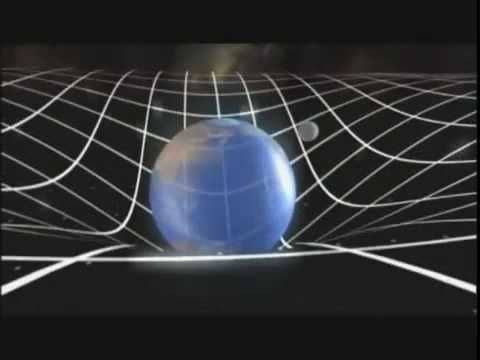
gravitational time differentials

Collapse
X
 
  • Time
  • Show
Clear All
new posts
  • creekster
    It is NOT a monkey!
    • Nov 2008
    • 22661

    #1

    gravitational time differentials

    I haven't yet seen Interstellar, but I understand it includes references to time differentials caused by the effects of gravity on time and space. This prompts me to ask a question of you smart science guys here that I have always wondered about but have been too lazy to try to find and answer. IT is this:

    When time differences due to relativity are included in plots involving humans, the humans themselves always age according to their local time. Why is this? IOW, what is the mechanism from space/time that interacts with our genetic clock that would make us slow down? Why wouldn't our genes continue to mark time like a clock that was never changed when it was carried to a new time zone? How would your body KNOW it should slow down? Is there some tangible interaction between the space/time fabric and our bodies in a way that has this effect?
    PLesa excuse the tpyos.
  • TripletDaddy
    sweet triple
    • Nov 2008
    • 58186

    #2
    im waiting for clackamascoug to chime in on this one.
    Fitter. Happier. More Productive.

    sigpic

    Comment

    • SCcoug
      Senior Member
      • Nov 2008
      • 7625

      #3
      Originally posted by creekster View Post
      When time differences due to relativity are included in plots involving humans, the humans themselves always age according to their local time. Why is this? IOW, what is the mechanism from space/time that interacts with our genetic clock that would make us slow down? Why wouldn't our genes continue to mark time like a clock that was never changed when it was carried to a new time zone? How would your body KNOW it should slow down? Is there some tangible interaction between the space/time fabric and our bodies in a way that has this effect?
      There is no interaction with our "genetic clock" there is an interaction with time itself. From a local perspective your body ages as it always ages. An atomic clock tells time the same as it always does. When compared to a non-local perspective time may have been moving faster or slower relative to the local time.

      Comment

      • Color Me Badd Fan
        Senior Member
        • Jan 2009
        • 12519

        #4
        I have a better understanding of how velocity affects time as opposed to gravity. That part of Interstellar was way over my head. I've always thought this experiment, which has been done multiple times, is quite interesting:


        It's nice to see how some segments of science are verified with predictable results.
        Part of it is based on academic grounds. Among major conferences, the Pac-10 is the best academically, largely because of Stanford, Cal and UCLA. “Colorado is on a par with Oregon,” he said. “Utah isn’t even in the picture.”

        Comment

        • Joe Public
          8.1 YPC
          • Apr 2011
          • 8531

          #5
          Time dilation.
          Last edited by Joe Public; 11-17-2014, 05:27 PM.
          "What are you prepared to do?" - Jimmy Malone

          "What choice?" - Abe Petrovsky

          Comment

          • SCcoug
            Senior Member
            • Nov 2008
            • 7625

            #6
            Originally posted by Color Me Badd Fan View Post
            I have a better understanding of how velocity affects time as opposed to gravity. That part of Interstellar was way over my head. I've always thought this experiment, which has been done multiple times, is quite interesting:


            It's nice to see how some segments of science are verified with predictable results.
            GPS wouldn't work without a correction for relativistic effects.

            Comment

            • creekster
              It is NOT a monkey!
              • Nov 2008
              • 22661

              #7
              Velocity relativity makes sense. But gravitational relativity doesn't so much.

              So am I to understand that gravity affects the matter itself, which exists in a matrix of time/gravity? IOW, there is no difference, it only appears so relatively. But if that's so, doesn't the nature of our existence in the relatively different locations mean that time somehow affects our biology? That somehow the gravity waves influence our existence? Or do I just not get it?
              PLesa excuse the tpyos.

              Comment

              • Pelado
                Bald not naked
                • Sep 2010
                • 21144

                #8
                Originally posted by creekster View Post
                Or do I just not get it?
                Probably this.
                "I think it was King Benjamin who said 'you sorry ass shitbags who have no skills that the market values also have an obligation to have the attitude that if one day you do in fact win the PowerBall Lottery that you will then impart of your substance to those without.'"
                - Goatnapper'96

                Comment

                • woot
                  Resident Science Cop
                  • Nov 2008
                  • 5531

                  #9
                  I haven't seen the movie, but something orbiting close to a black hole would have to be moving at a ridiculous rate of speed, so maybe that's it?

                  As I understand it, everything moves through spacetime at the same rate. Light photons (along with one other type of particle if I remember correctly) are massless, and move in physical space at the maximum rate, and therefore move through time at a minimal one. The same principal applies to a human moving at high speed, although a human or other substantive object can never move at the speed of light because we have too much mass (the M part of E=MC^2).

                  Comment

                  • ERCougar
                    Junior Member
                    • Nov 2008
                    • 10978

                    #10
                    Originally posted by creekster View Post
                    Velocity relativity makes sense. But gravitational relativity doesn't so much.

                    So am I to understand that gravity affects the matter itself, which exists in a matrix of time/gravity? IOW, there is no difference, it only appears so relatively. But if that's so, doesn't the nature of our existence in the relatively different locations mean that time somehow affects our biology? That somehow the gravity waves influence our existence? Or do I just not get it?
                    Your original question involved aging while traveling at really high speeds. The problem with it is that it assumes a universal time, which doesn't exist. Our bodies don't have to know anything--time just passes more slowly than for those who are (relatively) stationary. If you stuck a clock on board it would advance more slowly too. (This is the long form of pelados answer)

                    The answer as applied to gravity involves general (rather than special) relativity and the math is about a billion times more complicated, but the answer is still the same--nothing has to know anything, as there is no universal time. The only time any cell or molecule "knows" is the time it's "tied" to, which is affected by gravity (which is more of a curve in space-time than some external force affecting things--iow, gravity is more of a description of what happens to space-time when you stick matter into the math of relativity).
                    At least the Big Ten went after a big-time addition in Nebraska; the Pac-10 wanted a game so badly, it added Utah
                    -Berry Trammel, 12/3/10

                    Comment

                    • ERCougar
                      Junior Member
                      • Nov 2008
                      • 10978

                      #11
                      Originally posted by woot View Post
                      Light photons (along with one other type of particle if I remember correctly) are massless, and move in physical space at the maximum rate, and therefore move through time at a minimal one. The same principal applies to a human moving at high speed, although a human or other substantive object can never move at the speed of light because we have too much mass (the M part of E=MC^2).
                      Light, from its own inertial frame, doesn't really even move, but is everywhere at once.

                      Nothing with any mass at all can travel at the speed of light.
                      At least the Big Ten went after a big-time addition in Nebraska; the Pac-10 wanted a game so badly, it added Utah
                      -Berry Trammel, 12/3/10

                      Comment

                      • Uncle Ted
                        The Big 12 money shot.
                        • Apr 2010
                        • 28853

                        #12
                        Originally posted by creekster View Post
                        I haven't yet seen Interstellar, but I understand it includes references to time differentials caused by the effects of gravity on time and space. This prompts me to ask a question of you smart science guys here that I have always wondered about but have been too lazy to try to find and answer. IT is this:

                        When time differences due to relativity are included in plots involving humans, the humans themselves always age according to their local time. Why is this? IOW, what is the mechanism from space/time that interacts with our genetic clock that would make us slow down? Why wouldn't our genes continue to mark time like a clock that was never changed when it was carried to a new time zone? How would your body KNOW it should slow down? Is there some tangible interaction between the space/time fabric and our bodies in a way that has this effect?
                        You need to watch more Nova...


                        (Also see the full https://www.youtube.com/watch?v=BleB...eJ1rDJhmBdUj4g )

                        Spoiler for WTF Corn?:
                        What I want to know is why corn is the damn thing that they could grow on earth in this movie? Why corn? I hate corn.
                        "If there is one thing I am, it's always right." -Ted Nugent.
                        "I honestly believe saying someone is a smart lawyer is damning with faint praise. The smartest people become engineers and scientists." -SU.
                        "Yet I still see wisdom in that which Uncle Ted posts." -creek.
                        GIVE 'EM HELL, BRIGHAM!

                        Comment

                        • Uncle Ted
                          The Big 12 money shot.
                          • Apr 2010
                          • 28853

                          #13
                          Originally posted by woot View Post
                          I haven't seen the movie, but something orbiting close to a black hole would have to be moving at a ridiculous rate of speed, so maybe that's it?

                          As I understand it, everything moves through spacetime at the same rate. Light photons (along with one other type of particle if I remember correctly) are massless, and move in physical space at the maximum rate, and therefore move through time at a minimal one. The same principal applies to a human moving at high speed, although a human or other substantive object can never move at the speed of light because we have too much mass (the M part of E=MC^2).
                          Yes photons are massless but bend with gravity which is the weird thing.
                          "If there is one thing I am, it's always right." -Ted Nugent.
                          "I honestly believe saying someone is a smart lawyer is damning with faint praise. The smartest people become engineers and scientists." -SU.
                          "Yet I still see wisdom in that which Uncle Ted posts." -creek.
                          GIVE 'EM HELL, BRIGHAM!

                          Comment

                          • Uncle Ted
                            The Big 12 money shot.
                            • Apr 2010
                            • 28853

                            #14
                            Originally posted by ERCougar View Post
                            Light, from its own inertial frame, doesn't really even move, but is everywhere at once.

                            Nothing with any mass at all can travel at the speed of light.
                            Light takes something like 8 minutes to get from the sun to the earth. Gravitational waves travel at the same speed, if I recall correctly. The speed of light is the speed limit, however.
                            "If there is one thing I am, it's always right." -Ted Nugent.
                            "I honestly believe saying someone is a smart lawyer is damning with faint praise. The smartest people become engineers and scientists." -SU.
                            "Yet I still see wisdom in that which Uncle Ted posts." -creek.
                            GIVE 'EM HELL, BRIGHAM!

                            Comment

                            • ERCougar
                              Junior Member
                              • Nov 2008
                              • 10978

                              #15
                              Originally posted by Uncle Ted View Post
                              Light takes something like 8 minutes to get from the sun to the earth.
                              That's in our inertial frame. In its own, it's both at the sun and the earth at the same time. Time is infinitely dilated. Of course, length and mass don't have any real meaning either (to a photon...assuming it had some degree of you know, consciousness ).
                              At least the Big Ten went after a big-time addition in Nebraska; the Pac-10 wanted a game so badly, it added Utah
                              -Berry Trammel, 12/3/10

                              Comment

                              Working...