Announcement

Collapse
No announcement yet.

The Official Drought Thread

Collapse
X
 
  • Filter
  • Time
  • Show
Clear All
new posts

  • Uncle Ted
    replied
    Originally posted by Jeff Lebowski View Post
    Yeah, they explicitly say that it is not likely caused by global warming, but could help explain the severe drought we are seeing and is a good example of the kinds of phenomena that result in short-term temp/climate anomalies (relative to long-term trends).

    But when you say:


    you are showing CMBF-like ignorance of climate science. Climate scientists never claim that the models will predict all short-term variations/anomalies. They aren't designed that way and they aren't used that way. They are all about long-term trends.
    Jerry says that over 90% of the climate change scientists say otherwise...


    Please don't tell me Governor Moonbeam is wrong.

    Leave a comment:


  • Jeff Lebowski
    replied
    Originally posted by Paperback Writer View Post
    My understanding of the article is that there is not a link between the PDO and global warming. Just that that the PDO is coming out of a down-cycle and that is manifest by the "warm blob" in the NW Pacific. However, the article goes on to mention that the recent down-cycle could have supressed surface temperatures and explain why global warming has taken a hiatus-temperatures have not risen at the rate many had predicted. IMO, looks like they're looking for a culprit to pin blame on.

    I was hoping the article was going to add light to possible causes of the drought in California. No mention of bovine in the "warm blob" phenomenon. I blame the lack of bovine citation to NCAR scientists - they are in Boulder, CO and are not to be trusted. Nothing good comes from Boulder.
    Yeah, they explicitly say that it is not likely caused by global warming, but could help explain the severe drought we are seeing and is a good example of the kinds of phenomena that result in short-term temp/climate anomalies (relative to long-term trends).

    But when you say:

    IMO, looks like they're looking for a culprit to pin blame on.
    you are showing CMBF-like ignorance of climate science. Climate scientists never claim that the models will predict all short-term variations/anomalies. They aren't designed that way and they aren't used that way. They are all about long-term trends.

    Leave a comment:


  • Uncle Ted
    replied
    Originally posted by Paperback Writer View Post
    My understanding of the article is that there is not a link between the PDO and global warming. Just that that the PDO is coming out of a down-cycle and that is manifest by the "warm blob" in the NW Pacific. However, the article goes on to mention that the recent down-cycle could have supressed surface temperatures and explain why global warming has taken a hiatus-temperatures have not risen at the rate many had predicted. IMO, looks like they're looking for a culprit to pin blame on.

    I was hoping the article was going to add light to possible causes of the drought in California. No mention of bovine in the "warm blob" phenomenon. I blame the lack of bovine citation to NCAR scientists - they are in Boulder, CO and are not to be trusted. Nothing good comes from Boulder.
    LOL.

    Leave a comment:


  • Paperback Writer
    replied
    Originally posted by Uncle Ted View Post
    And then they say there may be no link...
    My understanding of the article is that there is not a link between the PDO and global warming. Just that that the PDO is coming out of a down-cycle and that is manifest by the "warm blob" in the NW Pacific. However, the article goes on to mention that the recent down-cycle could have supressed surface temperatures and explain why global warming has taken a hiatus-temperatures have not risen at the rate many had predicted. IMO, looks like they're looking for a culprit to pin blame on.

    I was hoping the article was going to add light to possible causes of the drought in California. No mention of bovine in the "warm blob" phenomenon. I blame the lack of bovine citation to NCAR scientists - they are in Boulder, CO and are not to be trusted. Nothing good comes from Boulder.

    Leave a comment:


  • Uncle Ted
    replied
    Originally posted by Paperback Writer View Post
    Bait and switch? The article seems to dedicate more space in trying to link the "warm blob" in the NW Pacific to the hiatus in global warming then to the drought in California.
    And then they say there may be no link...

    The PDO is kind of like a far more long-term version of the much better known El Niño-La Niña cycle. It is not thought to be related to global warming — rather, it is believed to be the result of “natural internal variability” in the climate system.

    Leave a comment:


  • Paperback Writer
    replied
    Originally posted by Jeff Lebowski View Post
    Bait and switch? The article seems to dedicate more space in trying to link the "warm blob" in the NW Pacific to the hiatus in global warming then to the drought in California.

    Leave a comment:


  • Uncle Ted
    replied
    Originally posted by Jeff Lebowski View Post
    Sorry, I don't see the link. Is this another cow joke?
    The web link is right there, Dude. Of course, the cows are most likely the real cause for the drought.

    Leave a comment:


  • Jeff Lebowski
    replied
    Originally posted by Uncle Ted View Post
    I wish the scientists would get together on this...


    http://www.usatoday.com/story/weathe...noaa/20095869/

    Maybe Obama needs to fire a few people and shake up some things at NOAA. I don't think the good folks in Cali can put up with this drought much longer so heads need to roll. Their cars are dirty and lawns are burning up, dammit!
    Sorry, I don't see the link. Is this another cow joke?

    Leave a comment:


  • Uncle Ted
    replied
    Originally posted by Jeff Lebowski View Post

    I wish the scientists would get together on this...

    Causes of Calif. drought natural, not man-made: NOAA
    [...]
    The NOAA report says midwinter precipitation is projected to increase because of human-caused climate change over most of the state. Seager said a low-pressure system, not a high-pressure system, would probably form off the California coast because of climate change.


    Low pressure creates clouds and precipitation.
    [...]
    http://www.usatoday.com/story/weathe...noaa/20095869/

    Maybe Obama needs to fire a few people and shake up some things at NOAA. I don't think the good folks in Cali can put up with this drought much longer so heads need to roll. Their cars are dirty and lawns are burning up, dammit!

    Leave a comment:


  • Jeff Lebowski
    replied
    Explanation for drought?

    http://www.washingtonpost.com/news/e...51428679166117

    Leave a comment:


  • Art Vandelay
    replied
    While I was on vacation the "irrigation" (well) water was turned on. Apparently the dude who blew out my sprinklers in the fall left one of the valves open. After two days of constant running, my neighbor noticed we weren't around and shut off the main valve. Sorry, California. If it makes you feel any better, I do have to pay $20 a month for my unlimited water --thank you Mighty Columbia.

    Leave a comment:


  • Jeff Lebowski
    replied
    Originally posted by cowboy View Post
    This is an excellent article, ...
    Del Gardner is a very cool guy. Grew up in Star Valley, got a BS and MS from UWYO and then a PhD at the top econ program in the country. He is a blast to chat with.

    Leave a comment:


  • Jeff Lebowski
    replied
    Originally posted by cowboy View Post
    This is an excellent article, but their explanation of the problem and proposed solution is markedly different from yours. First, the people who have "gotten quite wealthy" from subsidized water are mostly dead. Anyone who has purchased land with existing water rights has already paid for the subsidy in the form of higher land prices, and the article states that most of the land has changed hands since the subsidies were established. Further, by making farming more profitable through subsidized water, many non-farm businesses have shared in the wealth, so it hasn't benefited only a handful, but the entire Central Valley.
    I agree. A massive transfer of wealth from the US taxpayer to the western farmer.

    Net positive to everyone due to increased business activity and lower food prices? Maybe. Creates as many problems as it solves? Maybe.

    Originally posted by cowboy View Post
    Forcing farmers to pay market prices for water would immediately devalue land and force many into bankruptcy, plunging the Central Valley into a depression. The authors' idea of severing water rights and allowing farmers to sell them is an excellent solution, and has been used on the Eastern Slope for decades. My grandfather once owned half the water that a little town in Colorado uses for municipal water and purchased from him in the '60's.

    The problem and solution are best described like this: You buy a house that comes with an electricity allotment set at 20,000 Kwh/month ($240 value) for $10. Because this is cheaper than most electric bills, you pay more for the house than other houses in the area. The person who receives the windfall is the guy who owned the house when the $10 policy was implemented. Because you have cheap electricity, you use much more electricity than you otherwise would. Now comes an electricity shortage, and people are looking at you, the biggest electricity user in the valley. Taking your allotment and forcing you to pay market prices for electricity would drastically reduce the value of your home. As a compromise, the town allows you to sell all or part of your 20,000 Kwh, but you still have to pay $10/month for any remaining allotment, plus market price for anything you use beyond your allotment. You think you can get by on 10,000 Kwh, so you sell half your allotment, and you use half the electricity you used to use. The value of your house declines, but it is offset by the sale of your electricity allotment, and you use (waste) less electricity so there is more for everyone else.

    Like most economists, I'm very opposed to subsidies. Unfortunately, because markets are efficient and people buy things based on cash flow expectations, taking subsidies away does much more harm in asset devaluation and accompanying economic ripples than it does good for the taxpayer. Farm subsidies are gradually going away for many commodities, but we still have a way to go, and it will be a long process if we want to avoid a repeat of the '80's farm crisis.
    Most economists I have discussed the topic with argue that the ultimate solution would be to make all water a public commodity and let the market fully dictate the price. I.e., eliminate the water rights/water shares system completely. They are smoking crack, of course. It ain't gonna happen.

    BTW, I gave a presentation at a conference once about a really cool system for automating the impact analysis of water rights changes associated with well permits. Some economist in the audience kept harassing me in the Q/A period because he didn't like the water rights system. I wasn't presenting a defense of the water rights system, just describing a technical solution for making it more efficient. But he couldn't let it go. Weenie.

    Leave a comment:


  • cowboy
    replied
    Originally posted by Jeff Lebowski View Post
    Lots of multi-billion dollar water development projects funded and maintained by taxpayers. Farmers pay only a small fraction of the true cost of water and many of them have gotten quite wealthy from the subsidies. The rest of us pick up the tab.

    Decent explanation here:

    http://ageconsearch.umn.edu/bitstrea...ndHuffaker.pdf

    BTW, the author of this article is from Star Valley, Wyoming and got his PhD at the University of Chicago in Econ.
    This is an excellent article, but their explanation of the problem and proposed solution is markedly different from yours. First, the people who have "gotten quite wealthy" from subsidized water are mostly dead. Anyone who has purchased land with existing water rights has already paid for the subsidy in the form of higher land prices, and the article states that most of the land has changed hands since the subsidies were established. Further, by making farming more profitable through subsidized water, many non-farm businesses have shared in the wealth, so it hasn't benefited only a handful, but the entire Central Valley.

    Forcing farmers to pay market prices for water would immediately devalue land and force many into bankruptcy, plunging the Central Valley into a depression. The authors' idea of severing water rights and allowing farmers to sell them is an excellent solution, and has been used on the Eastern Slope for decades. My grandfather once owned half the water that a little town in Colorado uses for municipal water and purchased from him in the '60's.

    The problem and solution are best described like this: You buy a house that comes with an electricity allotment set at 20,000 Kwh/month ($240 value) for $10. Because this is cheaper than most electric bills, you pay more for the house than other houses in the area. The person who receives the windfall is the guy who owned the house when the $10 policy was implemented. Because you have cheap electricity, you use much more electricity than you otherwise would. Now comes an electricity shortage, and people are looking at you, the biggest electricity user in the valley. Taking your allotment and forcing you to pay market prices for electricity would drastically reduce the value of your home. As a compromise, the town allows you to sell all or part of your 20,000 Kwh, but you still have to pay $10/month for any remaining allotment, plus market price for anything you use beyond your allotment. You think you can get by on 10,000 Kwh, so you sell half your allotment, and you use half the electricity you used to use. The value of your house declines, but it is offset by the sale of your electricity allotment, and you use (waste) less electricity so there is more for everyone else.

    Like most economists, I'm very opposed to subsidies. Unfortunately, because markets are efficient and people buy things based on cash flow expectations, taking subsidies away does much more harm in asset devaluation and accompanying economic ripples than it does good for the taxpayer. Farm subsidies are gradually going away for many commodities, but we still have a way to go, and it will be a long process if we want to avoid a repeat of the '80's farm crisis.
    Last edited by cowboy; 04-09-2015, 09:59 AM.

    Leave a comment:


  • Dwight Schr-ute
    replied
    Originally posted by Jeff Lebowski View Post
    With a drought of this magnitude, there are no easy answers and it is wrong to single out any one thing as a solution/culprit. This is simply uncharted territory beyond anything we have ever seen.

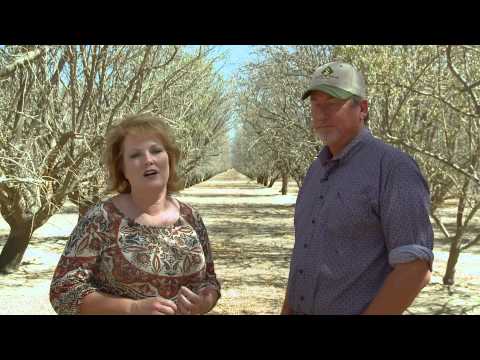
    As for conservation, it is nice to install 1 gpf toilets and low-flow shower heads, but about all that will accomplish is to make you feel better about yourself. From an urban perspective, lawns and swimming pools take the most water by far. And 80% of the water used in California goes to agriculture. Water for agriculture in the western US is heavily subsidized by US taxpayers. Farmers don't come anywhere close to paying the real cost (this is especially true in Utah). One way to manage the problem would be to let market dynamics dictate true water costs. You would see a quick adjustment in farming practices and crop choices and food prices. At the very least, the biggest impact we can have is pushing for water delivery and irrigation systems that are as efficient as possible.

    And btw, encourage your kids to go into water resource engineering. Growth industry.
    You would think so, but you'd be wrong. It's very easy to simplify this into a single problem.

    Leave a comment:

Working...
X